
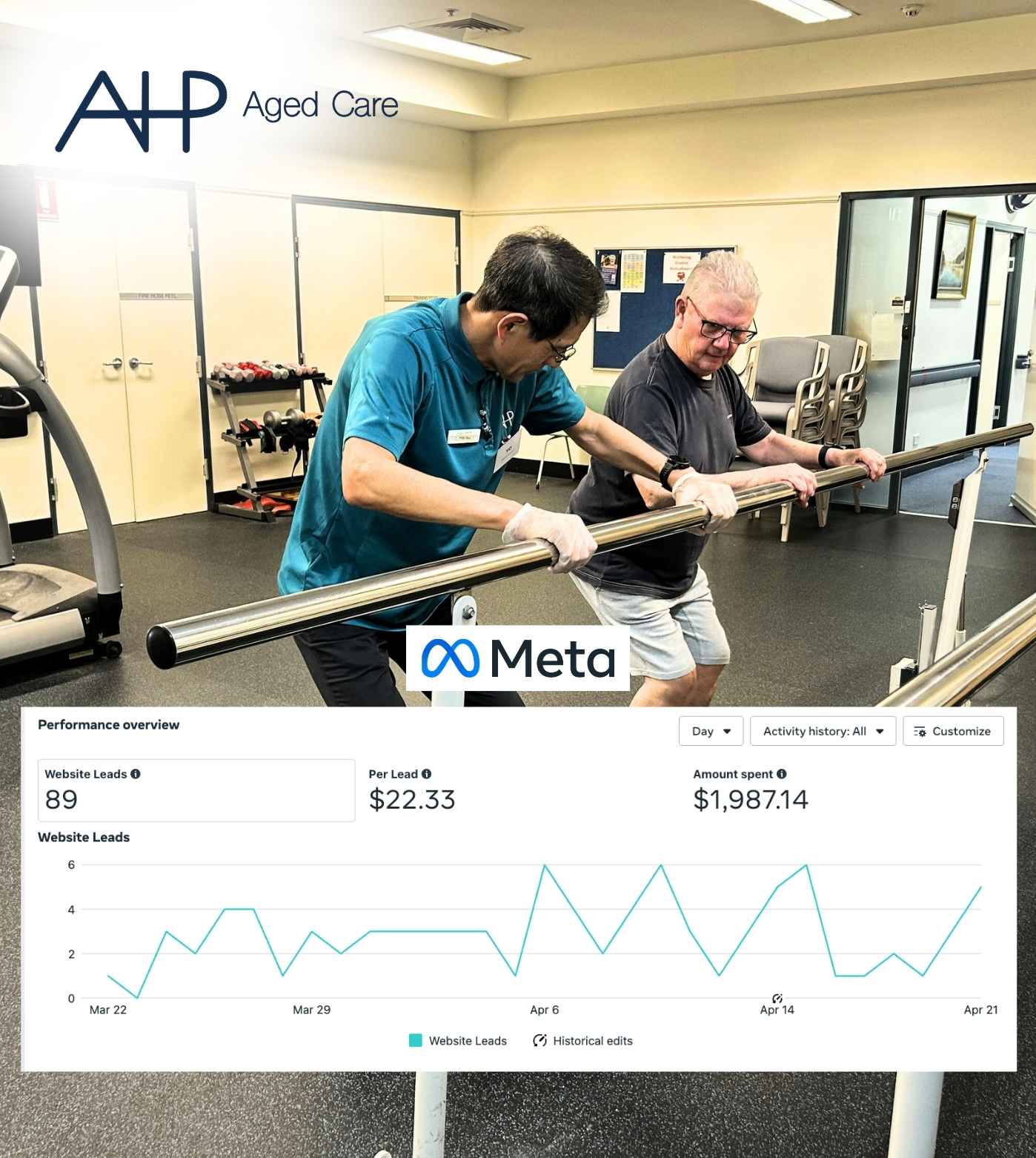
The most proactive outsourced marketing company we've ever used. Thanks for being both creative and also implementing/executing fast to get tangible results 👍

Rodney Doven
Asset building Systems
CONFIDENCE AT EVERY STEP
Help people understand your services and find the support they need, with clear communication for clients, families and professional referrers.
Clients we work with
EXPERIENCE IN YOUR INDUSTRY
FROM THE PEOPLE WE WORK WITH
The most proactive outsourced marketing company we've ever used. Thanks for being both creative and also implementing/executing fast to get tangible results 👍
Asset building Systems
An excellent company to work with for both digital marketing and web development. Their team consistently demonstrates strong expertise, proactively suggesting improvements and making ongoing adjustments to deliver the best possible results.

Allshelter
We’ve been working with XO Digital for nearly a year, and the results speak for themselves. They have done an outstanding job, and their team truly understands how to drive online search performance and deliver real outcomes. I highly recommend them to any business that is serious about search engine success.

Packserv
Excellent service and transparency. XO really feel like a partner that has our best interests at heart not an agency trying to rinse us for every dollar they can. Technically very sound and helped get our Hubspot into shape and manage our Google Ads account

Winki Energy
X/o Digital have doubled my appointments in a matter of 30 days. Highly recommended for google ads and SEO.

Lumi Lash & Co
X/o has been fantastic. The team has been able to get me ranking on page one for multiple cities in an industry that is extremely competitive. I can't recommend them enough!

DWLF
Highly recommended! They offer unlimited advice and suggestions to enhance the overall marketing performance of a business. They take complete ownership of the success of each campaign, truly dedicated to achieving remarkable results.

Nodd Solutions
Choosing XO Digital as our web development partner has been a game-changer for our business. Zyran and team are not only incredibly responsive but also exhibits a genuine commitment to understanding our unique needs, something we had struggled to find in previous partnerships. From the outset, XO…

PSC
XO Digital has completely transformed our approach to Google Ads. Previously, we were spending money with little to no results for months. However, once XO Digital took over, we saw a dramatic shift. They delivered great results in a remarkably short time frame, changing the game for us. Will…

Integrated Chiropractic
I am continuously impressed by the exceptional service we receive from XO Digital. They proactively manage our entire marketing portfolio, from website oversight to coordinating all marketing channels. It’s a relief having one dedicated person seamlessly handle everything. XO Digital consistently…

Zgrada Pools
WHAT WE UNDERSTAND ABOUT HEALTHCARE
In aged care, disability and allied health the person receiving the service is rarely the only one choosing it. Families, coordinators and clinicians all have to be convinced, and the rules about what a provider may say are strict.
Sons and daughters do the research, compare providers and make the call; the decision is made together. Copy written only to the client misses the person actually doing the work of choosing.
Support coordinators, plan managers, GPs, discharge planners and allied health professionals direct much of the flow. They need different material from families: catchment, capacity, specialisations, intake process and response times.
Advertising for a regulated health service cannot use testimonials, and claims must be accurate and not misleading. Aged care and disability providers carry their own obligations about how services and outcomes are described.
Enquiries you cannot staff damage the relationship with the referrer who sent them. Across much of the sector, recruitment marketing matters as much as client acquisition.
THE DETAIL THAT DECIDES THE RESULT
Four things that decide a healthcare account, and what we do about each.
Coordinators, planners and discharge staff place clients quickly and repeatedly. They choose on catchment, capacity, specialisation and how fast someone picks up the phone.
We build and maintain what referrers actually use: a clear intake page, catchment and service detail, current capacity, a direct contact. Campaigns aimed at coordinators and clinicians run separately from family campaigns. Referrer relationships are tracked as a source in the CRM like any other channel.
Families arrive confused about what is funded, by whom, and what they are entitled to. The provider who explains the pathway, from assessment to plan to funding to what happens next, earns trust before capability is even discussed.
Plain-language explanations of the funding pathway sit beside the service pages and are updated as programs change, alongside a simple “what happens when you call”. It is the highest-performing content on most healthcare accounts we run, and it pre-qualifies the enquiry before intake spends an hour on it.
The National Law prohibits testimonials in advertising for regulated health services, along with misleading or exaggerated claims and inducements. Provider obligations in aged care and disability add their own requirements about describing services and outcomes.
We build proof without testimonials: described process, staff credentials, service standards, quality and audit status, and anonymised experience narratives. Campaigns are reviewed against current guidance before they run, with the provider’s compliance contact in the approval chain.
A family calling three providers usually goes with the one that answers and can start. Intake that takes days loses both the client and the referrer who suggested you.
We measure time to first response and time to service start, and agree the enquiry volume intake can absorb. Where intake or roster capacity is the constraint, that is what we work on before anyone increases the media budget.
HOW WE RUN A HEALTHCARE ACCOUNT
Families and referrers are approached separately, to the same standard of accuracy.
Nothing runs without compliance review. Where a claim cannot be substantiated or a testimonial cannot be used, we find a compliant way to make the point rather than a quiet way around the rule.
WHAT THE WORK TAUGHT US
The corrections that shaped how we work in this sector.
An early aged-care campaign was built entirely around consumer search. It produced enquiries, but the provider’s best-fit clients were coming from coordinators and discharge planners we were not speaking to at all.
Every healthcare account runs two tracks from the start, with the referrer track properly resourced (material, a named contact, capacity updates) and measured as its own source.
A client-supplied quote went into a draft for a regulated service. It was caught in review, but it should never have been drafted: advertising a regulated health service must not use testimonials.
Compliance sits at the top of the brief for every healthcare client, proof is built from process, credentials and anonymised narrative, and drafts pass the provider’s compliance contact before anything is scheduled.
A campaign worked and enquiries doubled. Intake could not respond within the day, families went elsewhere, and two coordinators stopped referring, a cost that took months to repair.
We agree the enquiry volume intake can absorb, watch time-to-response weekly, and treat the referrer relationship as the asset it is. If intake or roster capacity is the limit, that is the first piece of work.
WHERE WE SIT
Healthcare is a proven industry for us rather than our deepest one, and it is the sector where we are most willing to decline the work as asked.
Advertising and provider obligations shape the work from the brief onwards. If a claim cannot be substantiated it does not run, including when a client asks for it.
Most agencies bring a consumer playbook to this sector. The coordinator, the planner and the clinician are the channel, and they judge you on capacity and response.
Growth that outruns intake or roster capacity damages a provider’s standing with the people who send them clients. That damage is slow and expensive to undo.
Providers with intake capacity, a compliance contact and services they can describe precisely. Aged care, disability and allied health providers who want the right clients rather than the most.
Providers already at or beyond capacity, anyone wanting claims or testimonials the rules do not permit, and services that cannot be described accurately without overstating outcomes.
LET’S START WITH YOUR BUSINESS
Tell us where you are, what you’d like to improve and how you’re currently investing in marketing. We’ll review the details before discussing the right next step.

Having trouble with the form? Open our contact page.
LET’S MAKE YOUR NEXT MOVE COUNT
Tell us where you want to go. We’ll talk through how to get there.
Start a conversation